
Gold vs Copper: 7 Differences and How to Tell Them Apart

Gold and copper differ in four measurable ways: colour (yellow against reddish orange), density (19.3 against 8.96 grams per cubic centimetre), hardness (copper is the harder metal, gold the softer) and chemistry (gold does not tarnish, copper oxidises to green). The quickest checks at home are weight for size, an acid spot and a hallmark.
Both metals are also traded as financial instruments, where a different set of differences applies: gold moves on rates, inflation and safe-haven demand, copper on industrial activity. For weight conversions on the gold side, see gold ounce to grams.
Key takeaways
- Density is the decisive test: gold is 19.3 g/cm3 and copper 8.96, so a gold piece weighs more than twice a copper piece of the same size.
- Copper is the harder of the two. Gold scratches and bends more easily, which is why jewellery gold is alloyed.
- Copper reacts with air and acids and turns green as copper oxide forms; gold does neither, which is what the acid test relies on.
- Melting point does not separate them in the field: copper melts at 1,085 C and gold at 1,064 C.
- Neither metal is attracted to a magnet. A pull toward a magnet points to an iron or nickel core under plating, not to gold or copper.
Table of contents
Telling Copper and Gold Apart
| Feature / property | Gold | Copper |
|---|---|---|
| Colour | Golden / yellow | Brown / orange |
| Density | 19.3 g/cm³ | 8.96 g/cm³ |
| Durability | Medium | High |
| Thermal conductivity | High | High |
| Electrical conductivity | High | High |
| Cost | High | Low |
| Rarity | Rare | Common |
| Applications | Jewellery, investment, technology | Wiring, electrical equipment, construction |
| Reaction with oxygen | Low | Tends to oxidise |
| Hardness | Soft | Harder than gold |
To an amateur or untrained eye, gold and copper may look alike, but in reality there is a huge difference between them.
What Is Gold?
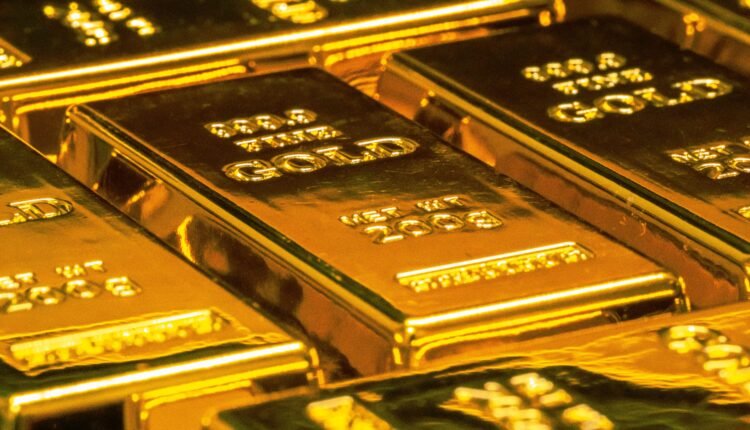
There is a direct relationship between gold’s material value and its value in its owners’ hands, and an inverse relationship between its material value and its fields of use: its high material value has meant it is used in only a few fields and applications.
This shows clearly in the economy, where the strength of the world’s currencies is measured by nations’ gold reserves. It is also used to make a number of electronic parts and the pieces found in historic places and homes, to display how high their material and economic standing is and to show that standing to the public.
As for its features and properties, it is highly malleable — it can be formed and shaped without cracking or breaking — and gold has a high density of 19.3 g/cm³.
Among its features too is that it is not affected by acids and its colour is stable, not altered or changed by external factors. It is measured by the karat standard to determine the amount of gold present in the alloy. This is one of the properties that show you the difference between gold and copper.
For example, if we say gold is 21 karat, this means the proportion of gold present reaches 87.5% and the rest is a mix of different metals, varying between copper at times and zinc at others; 24 karat, for example, means it is pure gold with no crossing proportion of any other metal.
Read more: Gold price forecasts
What Is Copper?
It is one of the metals with a distinctive colour: a red metal that is malleable and flexible and turns yellow — from the outside it resembles gold, in the case where it is mixed with zinc.
Naturally it is harder and tougher and lower in price; it is used in industry, such as fire nozzles, wires and locks. Platinum sits between the two, carrying a precious-metal name and an industrial demand base. These are among the properties of copper by which you recognise the difference between gold and copper. Both metals are also traded as financial instruments rather than physical goods, and our guide explains how to trade commodities in practice.
Copper is also affected by acids and its colour changes continuously depending on external factors, as a layer of copper oxide forms on its outer surface.

How Do You Tell Gold and Copper Apart?
There are a number of ways by which you can recognise the difference between gold and copper: some of them give highly accurate results and others are approximate. Let’s look at a number of these methods:
- By outward appearance: if it is shiny, bright and lustrous it will be gold, and if it looks cheap and dull it will certainly be copper.
- If you try to hallmark the piece (in two readings) — the karat, or the proportion of gold in that piece in parts per thousand — then it is gold; if no hallmark can be applied it is considered copper, though this does not rule out antique gold pieces being without a hallmark.
- Gold cannot oxidise with air despite the presence of oxygen; copper, on the other hand, oxidises quickly and changes its colour to green.
- Among the clues by which you also recognise the difference between gold and copper is that gold is far more malleable, shapeable and easier to scratch than copper.
- Another important feature and property is the reaction with acids: gold is chemically inactive or only slightly active, which makes it largely unreactive with most acids, while copper reacts with acids. The two can also be separated with an acid: place drops of it on the copper piece — if its colour changes you know it is copper, and if the colour does not change you know it is gold.
- Copper’s density, 8.96 g/cm³, is far lower than gold’s 19.3 g/cm³, so a gold piece weighs more than twice as much as a copper piece of the same size.
- Melting point is a poor field test: copper melts at 1,085 degrees Celsius and gold at 1,064, so the two are close and gold is the lower of the pair. Gold and copper can also be distinguished by X-rays, through which the internal crystalline structure can be determined and its contents identified so the two can be told apart — and this is the last point in the difference between gold and copper.
By the end of the article you have surely come to know the difference between gold and copper well, but it helps to understand more about how gold and copper differ greatly in many respects, such as colour, density, hardness and uses. Here are some ways you can tell gold and copper apart:
1. Colour:
- Gold: golden or pale yellow.
- Copper: orange or brown.
2. Density:
- Gold: high density, 19.3 g/cm³.
- Copper: lower density, 8.96 g/cm³.
3. Hardness:
- Gold: soft and malleable, easy to fold and shape.
- Copper: harder and less malleable compared with gold.
4. Electrical conductivity:
- Gold: a good conductor of electricity, but not as effective as copper.
- Copper: an excellent electrical conductor, which makes it a common material in electrical wiring.
5. Cost and value:
- Gold: a precious material with a high value.
- Copper: lower in cost and value compared with gold.

6. Uses:
- Gold: used mainly in jewellery, as well as in some technical and industrial applications.
- Copper: usually used in electrical wiring, pipes and some household tools.
7. Reaction with oxygen:
- Gold: does not oxidise easily.
- Copper: oxidises and changes colour when exposed to air for a long time, and may show a green layer of oxidation.
Using these distinctions, you can easily tell gold and copper apart.
Copper Prices by Year, From the USGS Series
The figures below are the annual unit value of copper in the United States as published by the U.S. Geological Survey in its copper data series 140 (last modified 27 June 2023), in dollars per metric ton. The per-pound column is that figure divided by 2,204.62.
| Year | Unit value, USD per metric ton | Equivalent, USD per pound |
|---|---|---|
| 2000 | 1,940 | 0.88 |
| 2005 | 3,820 | 1.73 |
| 2010 | 7,680 | 3.48 |
| 2015 | 5,650 | 2.56 |
| 2020 | 6,320 | 2.87 |
In trading, the factors that matter differ between gold and copper in several respects:
Gold:
- Safety: gold is considered a safe haven in times of economic crisis.
- Volatility: gold’s price is usually less volatile compared with copper.
- Supply and demand: gold’s price is affected by factors such as interest rates, inflation and political stability.
- Investment: gold is usually used as a tool for storing value, not only for short-term trading.
- Technical and fundamental analysis: both are used to trade gold, but technical analysis is more common.
Copper:
- Global economy: copper’s price is considered a good indicator of the health of the global economy.
- Volatility: copper is more volatile because of factors such as production and consumption in industry.
- Supply and demand: copper is greatly affected by factors such as production in major countries like Chile and China, as well as by the use of copper across a variety of industries.
- Short-term trading: copper is usually traded for short-term profit and technical analysis is used heavily.
- Geographic and political factors: the effects of wars and political unrest can have a quick and large impact on copper’s price.
Summary:
- Gold is usually traded as a tool for storing value and protecting against inflation and economic crises. That second claim is stated far more often than it is tested, and our page on the inflation-protection claim sets out the three things it has to name before anyone can check it.
- Copper is usually traded based on expectations of global economic activity, and it is a good indicator of the health of the global economy.
You should always make sure you understand all the risks associated with trading before you begin.
Frequently Asked Questions:
What is copper’s original colour?
Copper’s original colour is orange, tending toward a reddish-brown. But over time, and with copper’s exposure to weather, oxidation and corrosion, its colour can change and green, brown or black spots can appear. Copper’s original shine can be restored using certain cleaners and polishes made for metals.
How do I tell gold from copper at home?
You can use some simple methods to distinguish gold from copper at home, as follows:
- Visual check: you can notice the difference in gold’s yellow colour and its greater brilliance than copper. You can also weigh the piece, since gold is more than twice as dense as copper for the same size.
- Magnet test: neither gold nor copper is attracted to a magnet, so a piece that pulls toward one has an iron or nickel core under a plated surface and is neither metal.
- Chemical test: simple chemical measures can be used to determine whether the metal is gold or copper, such as a spot of nitric acid, which dissolves copper and leaves gold unaffected.
Note that these methods may not be 100% accurate and are no substitute for having the metal examined by an expert or consulting the specialists in this field to verify metals accurately.
How do you know genuine copper?
To identify genuine copper, you can use some simple methods such as:
- Magnet test: copper is not attracted to a magnet, so a piece that pulls toward one is not solid copper.
- Visual check: you can notice copper’s reddish-brown colour and its lesser shine than gold.
- Stamp test: the copper metal may carry a stamp or trademark, which may indicate that it is genuine.
Note that these methods may not be 100% accurate, and accurately verifying the metal’s authenticity may require chemical tests or referring to an expert or professional in this field to verify metals accurately.
Does aqua regia react with gold?
No — aqua regia is an acidic substance made of a mixture of nitric acid and hydrochloric acid in a specific composition; it is strong and able to dissolve metals such as gold and platinum. Aqua regia’s reaction with gold clearly dissolves it and breaks down its structure completely.
Conversely, ordinary water and fire do not significantly affect gold and do not react with it, and ordinary water can be used to clean gold jewellery and keep it in good condition without any harmful effect on the gold.
Disclaimer: This article is for educational purposes only and is not investment advice or a recommendation to buy or sell any asset. Trading commodities such as gold and copper through CFDs involves leverage and carries a high risk of losing your capital quickly. Only trade with money you can afford to lose, and consider speaking to a licensed financial adviser before making any decision. Some links on this page are affiliate links: we may earn a commission at no extra cost to you.