
Price Action Strategy

Price action is one of the most widely used trading approaches, especially among traders who prefer to keep indicators off their charts. Whether you trade on short or long timeframes, a price action strategy can fit the way you work.
What Is a Price Action Strategy?
Price action simply means studying a market’s past movement to see how traders reacted to it at the time. It relies mainly on Japanese candlesticks, along with a few other chart patterns.
The strength of the approach comes from the idea that reading information is the core of trading, and that trader behaviour tends to repeat in the future based on the past.
Read also: The Broken Trend Strategy
How the Price Action Strategy Works
There are many strategies built on price action, more than a single article can cover. Here we focus on one setup that relies mainly on the hammer candle.
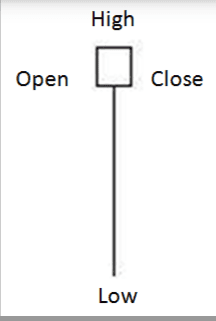
The hammer candle appears within a downtrend and points to a possible upcoming reversal. It suggests that sellers no longer have enough strength to hold the trend. Its shape looks like a hammer, as shown below.
Read also: The Best Types of Japanese Candlesticks
What the Strategy Requires
This strategy needs no technical indicators. All you need is to recognise the shape of the hammer candle described above and how it forms.
Which Timeframe to Use
You can apply this strategy on any timeframe, from the one-minute up to the monthly chart. To be honest with you, though, it does not work well on short timeframes, so it is better used on larger ones, from the one-hour up to the monthly chart.
The Strategy Rules
Let’s go deeper into the strategy. Now we reach the most important part, its rules, and we’ll break them into steps so they’re easy to follow.
1. Look for the hammer candle
The first step is to find the hammer candle the strategy is built on. Remember that this candle must appear in a downtrend, not an uptrend. Look at the figure below.
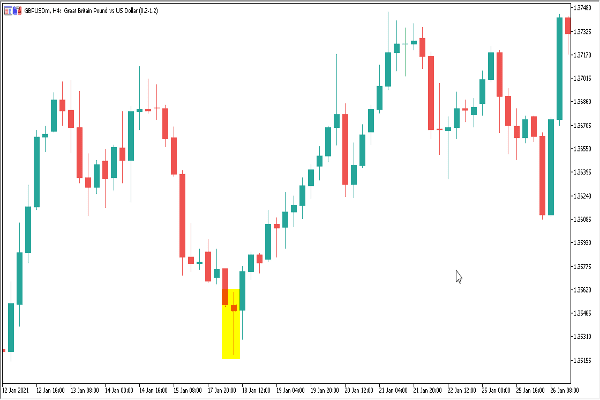
In the figure above you can see the hammer candle we described and how it formed within the downtrend, highlighted in yellow.
2. Enter a buy trade
As mentioned, the hammer candle points to weakness among sellers, which can push price to change direction. A change of direction is not guaranteed, though. It might be only a correction, or nothing may happen at all.
To limit losses, we wait for a confirmation signal from the next candle, which should close higher than the hammer, and its body should be larger than its lower shadow. Look at the figure below.
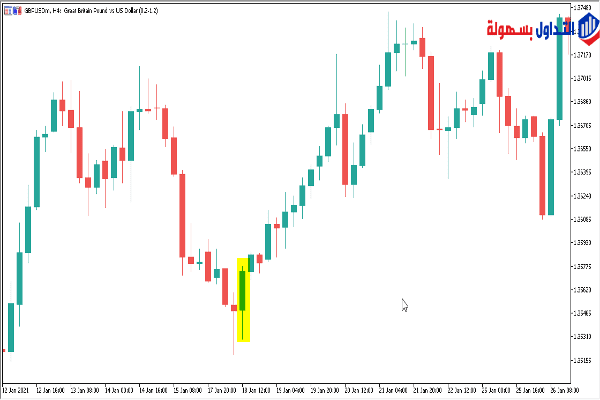
In the figure above you can see how strong the candle following the hammer is: its lower shadow is large and its upper shadow is small, and its body is larger than the shadow. You can now enter a buy trade once it closes and a new candle opens.
3. Set the stop-loss
Now we reach an important part: setting the stop-loss, which can be placed below the hammer candle, since breaking that level to the downside means the correction or bullish reversal has failed.
4. Set the target

There are several ways to set the take-profit in this strategy, and they largely come down to your own judgement. One of the first is to close the trade two candles after entry and settle for the profit you’ve made.
Some traders leave the trade open and only close it when a signal shows the current corrective move is ending or weakening. You can also use support and resistance. As mentioned, this comes down to the trader’s judgement and market experience, so if you’re a beginner, the first method is preferable.
In short, a price action strategy describes the characteristics of a security’s price movements, and this movement is often analysed in relation to price changes in the recent past. Put simply, it is a trading technique that lets a trader read the market and make their own trading decisions based on recent, actual price moves rather than relying only on technical indicators.
Because a price action strategy sets aside fundamental analysis factors and focuses more on recent and past price movement, price action trading relies on technical analysis tools.
Read also:
Digital Scalping Strategy
The 3 Best Trendline Trading Strategies
The MACD Indicator with the Trendline Strategy
Try this strategy on a demo account first
A strategy that looks clear in an article can behave very differently under real spreads and volatility. Testing it on a demo account shows you how it performs before you commit any capital.
Advertising disclosure: partner link. Easy Trade may receive compensation. Educational content, not financial advice. CFDs carry a high risk of losing your capital.
Frequently Asked Questions
What is the SK strategy?
A price action strategy is one of the strategies used to trade financial markets. It’s based on analysing charts and focusing on the price movement of financial assets rather than using technical indicators or news.
It works by following an asset’s price movements on its chart and analysing price patterns, swings, and changes in direction. One of its main advantages is that it doesn’t need complex indicators or complicated settings; it relies heavily on the ability to read price behaviour on the chart and make suitable decisions based on that.
In general, a price action strategy should be part of any complete trading strategy, since it can be used to clarify price movements and make suitable decisions about buying or selling.
What are forex strategies?
There are many trading strategies in the forex market, among them:
1. Moving Averages Strategy: this relies on using moving averages to identify the market’s direction and pinpoint ideal entry and exit points.
2. Scalping Strategy: this relies on opening a large number of trades over a short period, aiming for a small profit on each trade and a relatively large loss on the losing trades.
3. Reversal Strategy: this relies on analysing price patterns on the chart to identify trend reversal points and make suitable decisions about buying or selling.
4. Breakout Strategy: this relies on identifying the critical points on the chart that signal a break of resistance or support, then deciding whether to buy or sell.
What are the best trading strategies?
There is no single strategy that counts as the best for trading forex; each strategy has its advantages and drawbacks, and you should choose the one that suits the investor’s personal style and goals.
In general, choosing a suitable strategy calls for a thorough study of the forex market, analysis of charts and technical indicators, and identifying the critical points to buy and sell.
It’s also important for the investor to have broad knowledge of the forex market and the foundations of technical and fundamental analysis, and to study the factors that affect price movement and the psychology of investors.
Investors may try several strategies before settling on the one that suits them, and they can draw on tips, articles, and training courses from trustworthy sources to help improve their trading skills and performance in the forex market.
Risk & disclosure: This article is for educational purposes only and is not investment advice or a recommendation to buy or sell any financial instrument. Trading forex and CFDs carries a high level of risk to your capital because of leverage, and price action signals such as the hammer candle can fail, so you may lose some or all of your investment. Do your own research and consider your risk tolerance before trading. Some links on this site may be affiliate links, meaning we could earn a commission at no extra cost to you.