
Best Currency Trading Methods

Many people turn to currency trading in the hope of returns, partly because this kind of trading is shaped by global markets and banks. You may also want to read about Easy Currency Trading Strategy.
If you want to understand the main currency trading methods and how withdrawing funds works, this article walks through the basics.
It explains what the different currency trading methods are and how profits are withdrawn, sets out the fundamentals of currency trading, covers the advantages of trading currencies, looks at some of the trading platforms available, reviews approaches that traders use, and lists the skills a trader should build.
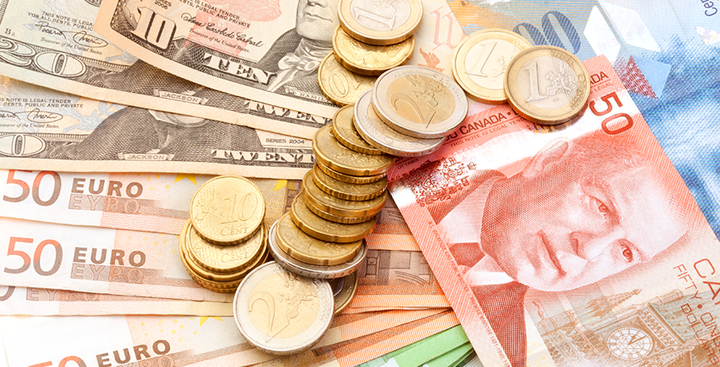
Currency trading methods and how profits are withdrawn
Global markets today handle every kind of trade, moving large volumes and significant capital across different asset types all over the world.
Electronic trading has become a fast and widely used way to take part, covering the range of investment instruments traders use to seek returns through buying and selling based on supply and demand.
The main currency trading methods
Trading in securities
This is one of the most common instruments used in global markets.
Securities within this category vary from one another according to the rights they grant their owners, the income expected from them, and the level of risk involved in trading them.
Trading and investing in real estate
This method lets you take part in global markets over the internet by investing in real-estate bonds.
It is considered one of the larger investment categories. Returns can be significant but vary, which is part of why a number of investors are drawn to it.
Trading in commodities
Commodities trading is widely followed, and many traders treat it as one of the more stable segments compared with other types of trading.
Global exchanges pay close attention to it because a large group of traders take part, particularly since many commodities are everyday essentials that are hard to do without.
Commodities are divided by type and sector: industrial goods, agricultural goods, and traded goods such as metals and gold, silver, copper, cotton, wheat, corn, and other commercial products.
Trading in foreign currencies
Foreign-currency trading is the best known form of currency trading, split into major currencies and cross currencies.
In this method, each currency is priced against another in the form of pairs, and traders speculate on prices to seek returns from one currency rising in value against another.
Trading in digital currencies
This method emerged more recently, after the global crisis of 2008.
It has generated a lot of debate in the trading world. It is also called crypto-currency trading, and the best known digital currency of all is Bitcoin.
The basics of currency trading
When trading currency pairs, you buy one currency while selling another.
As an example, take the British pound against the US dollar, two of the most widely traded currencies.
The symbol GBP (£) refers to the British pound, and “USD” refers to the US dollar.
In this pair, the British pound is the base currency and the US dollar is the quote currency.
The pair is treated as a single unit even though it refers to two separate currencies. In other words, you trade the GBP/USD pair, not “the British pound and the US dollar” separately.
If we take the British pound against the US dollar, the pound might equal 1.2763 US dollars.
That tells you the pound is stronger than the dollar here, or, put another way, that it takes more dollars to buy one pound.
Advantages of currency trading
Currency trading has several features worth knowing, and this section walks through them.
Trading with small capital
You do not need large capital to start trading currencies; it is possible to enter the foreign-exchange market with a small amount.
One notable feature of the foreign-exchange market is its size: more than 4 to 5 trillion dollars are traded in a single day. That works out to roughly 200 billion US dollars an hour, 3 billion dollars a minute, and 5 million dollars a second.
This encourages investors of all kinds, from every part of the world, to put their savings into this market, making it the most widely traded market anywhere.
A key reason for the strength of the foreign-exchange market is its scale, with investors of every category taking part worldwide, which keeps it open to individuals, firms, and institutions alike.

You do not have to start with a lot of money in the foreign-exchange market; you can begin with a small amount.
Getting started in the foreign-exchange market costs less than trading stocks and options contracts, which is one of the features that draws many investors to it.
Profiting in both rising and falling markets
In the foreign-exchange market you can trade in both directions, buying in an uptrend and selling in a downtrend, thanks to the pairs system in the forex market.
This gives a trader the chance to act on a move whether entering as a seller or as a buyer.
A decentralized, borderless market
The forex market is decentralized, with no geographic boundaries, and trading is not tied to a specific place.
Worth noting: the foreign-exchange market runs over electronic communication networks on an “OTC” basis, letting a trader reach the market quickly, see all the prices, and trade from anywhere in the world using a trading platform or software.
Currency trading platforms
Currency trading is known for strong competition, matched by fierce competition among trading platforms globally, with many platforms that differ in what they offer.
FXTM
FXTM is regarded as a strong broker across the board, with a high variable leverage, a welcome bonus, and fast execution.
The platform offers a very competitive fee structure that tends to lower trading costs.
It was founded in 2011 and has expanded its business in recent years.
XM
XM was founded in 2009 and grew into a large, well-established international investment firm and a leader in this field.
Its clients number more than 5 million, from 190 different countries, and it employs more than 600 professionals with long experience in the financial sector.
The platform operates in more than 30 languages, including Arabic.
RoboForex
RoboForex is among the more popular platforms with traders in the forex market.
It has a broad knowledge base alongside trading robots and indicators, and offers more than 12,000 financial instruments.
The platform lets you choose between netting and hedging systems.
Approaches traders use in currency trading
If you are new to currency trading, you are probably asking which approaches work. The sections below cover a few.
Test your trading on a demo account
Every licensed trading firm lets traders open a demo account. Whether you are a beginner or not, it is best to test any new strategy on the demo account first to see how it performs, and to treat your demo trades as if they were real.
You can then move on to opening a live account and applying the strategy you have adopted at the smallest available trade size.
You can also use forex software to simulate market conditions and get a sense of a live trading session.
Be more cautious in volatile markets
You should be careful when trading in volatile markets. Volatility can keep your trading active, but if you are not careful it can undo everything you have built.
Markets often move sideways, which widens spreads and can make your chosen strategy a poor fit at that moment, so stay cautious, keep more than one strategy ready, and try to anticipate what might happen.
Write down everything you learn
To lock in what you have learned about currency trading, write down everything related to your trading and record your strategies and plans, both the ones that worked and the ones that did not.
Record every reason behind a loss so you do not repeat it.
Key skills a currency trader needs
- A currency trader should stay continuously aware of events affecting currency trading around the world.
- They should keep up with political and economic developments to read the direction of the market.
- A currency trader should adopt a clear, sound strategy for working in this field.
- They should stay cautious, avoid reckless planning, and keep a high degree of flexibility and patience.
- A currency trader should trade with their own money and not borrow from outside.
- A currency trader should be able to absorb a loss and respond sensibly, working to move past it without becoming discouraged.
To close: a currency trader should plan carefully before trading currencies, start with a modest amount they can afford to lose, learn which platforms suit currency trading, and pick the one that fits their plan.
Risk disclaimer
This article is for educational purposes only and is not investment advice or a recommendation to trade any product. Trading currencies and CFDs involves leverage and carries a high risk of losing money rapidly; you can lose more than your initial deposit. Only trade with money you can afford to lose, and seek independent advice if needed. Some links on this page are affiliate links: if you open an account through them we may receive a commission at no extra cost to you, and this does not affect the information provided.