
Wave Analysis for Forex Trading

Forex trading has grown steadily more popular over the past decade, and many traders have found it a profitable pursuit or even a full career. This article looks at wave analysis for forex and how traders use it to work toward a profit.
Most forex traders are effectively day traders, and as a rule they apply technical analysis to their trading. To trade forex more effectively, many traders turn to technical analysis tools such as wave analysis for forex, and here we look at how it can be applied to your own currency trading.
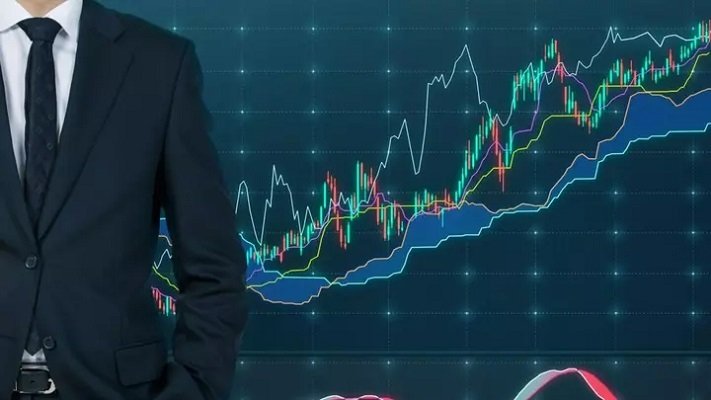
Wave analysis for forex is widely used in financial markets and carries real weight. It is a market analysis method developed by Ralph Nelson Elliott, based on the idea that many price moves unfold in five-wave and three-wave sequences.
Learning the technical detail behind this wave pattern can add to your forex trading skills. This article gives you a working grasp of how one method of cross-market trading operates, and answers a question many beginner traders ask: how can wave analysis for forex be applied to actual trading?
How Do You Apply Wave Analysis Rules in Forex Trading?
Forex trading is one of the most complex and potentially rewarding areas of finance. As international trade becomes more interconnected, business owners and market analysts need to identify and understand how currencies move in relation to one another.
Elliott Wave theory, which forms the basis of wave analysis for forex, holds that prices move in five waves in the direction of the trend, and that this five-wave advance is followed by a three-wave pullback known as a correction.
In a downtrend, a five-wave decline is followed by a three-wave rise. The five-wave sequences are called impulse waves, while the three-wave sequences are called corrective waves.
In the impulse wave, price rises during the first stage of the uptrend. This is typically when investors and traders expect the trend to turn, which can bring a pullback in price.
In the second wave, prices do not fall by much before the trend resumes its climb in the third wave, which can create an opportunity for traders in the market.
In the fourth wave, prices pull back as traders take profits and the market approaches a peak, or resistance level, that tends to get retested later. This can bring a more optimistic read from investors and traders who track market news alongside wave analysis for forex.
Applying Wave Analysis for Forex to Improve Profitability
Wave analysis for forex matters to any forex trader who wants to get more out of their trading, since it is used to gauge the direction of the main market trend and the points where currency prices tend to turn, based on the psychology of brokers and other market participants.
Applying wave analysis for forex well is a solid starting point for learning the mechanics of currency trading. You may not find every technical concept explained in full within a single article — this piece aims to give a broader look at the subject.
Like any market theory, wave analysis for forex has both strengths and drawbacks. The value lies in understanding its core ideas well and applying them correctly to your own trading.
It matters that wave analysis for forex works best as a supporting measure for trade decisions, since on its own it offers limited guidance on precise entry and exit points.
Even so, wave analysis for forex is a useful tool for strengthening an overall trading approach, and it can help with setting stop-loss levels and gauging the potential strength of a market move.
An oscillator tends to work well here when combined with indicators such as MACD and RSI — pairing these tools can help traders read entry and exit points with fewer false signals, though not without exceptions.

When applying wave theory to forex trading, the underlying rules are much the same as in stocks. The key difference is that short-selling stocks is far harder, while in forex it is comparatively easy to go long or short since you are simply buying, selling, and trading currency pairs.
Is Wave Analysis Theory for Forex Accurate?
In theory, Elliott waves have been widely accepted as the basis for wave analysis for forex, and just as widely criticized within the trading community. While many traders build their analysis around wave analysis for forex, others reject using it altogether.
This remains only a theory, and its effectiveness has never been proven — which means any wave-based currency analysis and recommendations should be used at your own responsibility.
Another point to flag: among the many trading indicators available on trading platforms, wave analysis for forex is one of the most widely used, largely because it gave rise to a distinct branch of technical analysis.
The best way to check whether an oscillator combined with wave analysis for forex can strengthen your trading approach is to test it through extensive practice first. If you are not yet familiar with these tools, it makes sense to try them on a demo account with virtual funds before trading with real money.
Wave analysis can be difficult to grasp when you start out, but with practice you can build real familiarity with it over time. Once you begin using an oscillator alongside your own trading approach, you will be able to tell whether wave analysis for forex fits your trading style and whether it adds value for you.
Test this indicator without risking capital
Reading about an indicator is not the same as watching it behave on a live chart. A demo account lets you apply the settings above to real market data and see how the signals form before any money is involved.
Advertising disclosure: partner link. Easy Trade may receive compensation. Educational content, not financial advice. CFDs carry a high risk of losing your capital.
Frequently Asked Questions
What are the schools of technical analysis?
The schools of technical analysis are the different approaches and methods technical analysts use to study price charts for stocks, currencies, commodities, and other financial assets. These include several distinct techniques, such as Japanese candlesticks, price support and resistance, moving averages, channels, and trendlines.
How many Elliott waves are there?
Elliott Wave theory counts eight waves in a full cycle: five impulse waves and three corrective waves. It is used by technical analysts to study financial markets and anticipate price direction. The theory holds that prices tend to follow a repeating pattern of five up-and-down waves, shaped by factors such as supply and demand, inflation, and interest rates.
What is wave analysis in trading?
Wave analysis in trading is a technical analysis method that studies price charts for stocks, currencies, and commodities to identify trends and repeating wave patterns in asset prices. Wave analysts study these repeating price patterns to anticipate future price movement and inform trading decisions.
What are the types of wave analysis?
There are several types of wave analysis, including impulse wave theory and corrective wave theory, which in turn include other sub-types such as zigzag and flat corrections.
Disclaimer: This article is for educational purposes only and is not investment or financial advice. Wave analysis and Elliott Wave patterns are analytical tools, not guarantees of any trading outcome. Trading forex and CFDs carries a high level of risk, including the possible loss of your invested capital, largely due to leverage. Test any new method on a demo account before using real funds, and consult a licensed financial advisor before making trading decisions. This page may contain affiliate links; we may earn a commission at no extra cost to you if you sign up through them.