
Wolf Waves Indicator

- A free, powerful indicator
- Draws Wolf Waves automatically on the chart
- Helps identify and mark Wolf Wave patterns on the chart as closely as possible
- Works on all currency pairs and timeframes
- Compatibility: MetaTrader 4
Channels give traders a simple, reliable way to identify their own entry and exit points in the market. While the basic rules of channel trading give traders a good idea of where price is moving within the channel, they offer little insight into where a breakout might occur. Identifying the pattern known as Wolf Waves, however, can help traders anticipate the possible timing and range of these breakouts — the pattern is a tool for estimating, not a guarantee of what price will do. For more, read about Price Action Candle Wick.
Although the Wolf Wave indicator is very capable, many traders still prefer the manual method. The indicator can be relied on as a starting point, but not always as the final word.
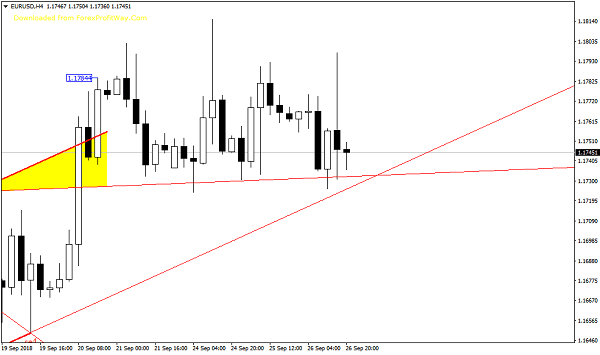
Understanding the Wolf Wave Indicator:
Wolf Waves were first identified by Bill Wolfe and his son, Bryan. Wolf Waves occur naturally in every market, and to recognize them, traders need to identify a series of price swings that match specific criteria:
- Wolf Waves must form within a consistent time period.
- The third and fourth waves must stay inside the channel created by the first and second waves.
- The third and fourth waves must show symmetry with the first and second waves.
The full set of the pattern rules behind the indicator, including the two conditions that void a count, is set out separately. In a Wolf Wave pattern, the fifth wave is expected, according to the theory, to break out of the channel. A line drawn from the start of the first wave through the start of the fourth wave is used to estimate a target price for where the fifth wave might end — it is a projection, not a certainty.
If a trader identifies Wolf Waves correctly as they form, the start of the fifth wave can represent an opportunity to take a long or short position, with the projected target price marking the point where the trader plans to take profit on the position. As with any pattern-based signal, price does not always reach the projected level, so outcomes can vary.

Identifying Complex Wolf Waves With Technical Analysis:
Technical analysis uses chart patterns such as Wolf Waves to help traders read possible market moves and time trades. It does not guarantee a particular outcome.
Traders who use technical analysis look at charts that show a security’s price movements over a period of time. Technical analysis generally relies on supply-and-demand theory, which points to certain higher or lower price levels at which a security might be traded.
Support levels correspond to prices low enough to attract sufficient demand to stabilize and lift a stock’s price, while resistance levels correspond to prices high enough to prompt shareholders to sell and take profits — reducing demand and causing prices to stabilize or fall.
When technical analysts look for patterns such as Wolf Waves, they are trying to take advantage of a breakout, where prices move outside the channel formed by support and resistance.
The same supply-and-demand principles that generate support and resistance levels also suggest that prices tend to rebalance after a breakout, so traders aiming to identify strong entries need to be able to spot the right buy or sell points in real time.
While there are many techniques for doing this, traders face significant risk if they misread the Wolf Waves or the underlying trend. Traders interested in this method generally benefit from researching Wolf Waves and the theory behind them carefully, testing the approach without risking real money, and making sensible use of hedges or stop-loss orders to limit the potential downside of a mistaken trade.
Disclaimer: This article is for educational purposes only and does not constitute investment advice. Wolf Waves and other chart patterns are analytical tools, not guarantees of future price movement — signals can fail, and past pattern behavior does not predict future results. Trading forex and CFDs involves significant risk of loss, including losses beyond your deposited funds where leverage is used, and is not suitable for every investor. This page may contain affiliate links; if you open an account through one of these links, Easy Trade may earn a commission at no extra cost to you.